
Interview with an Expert: Rebecca Hawley
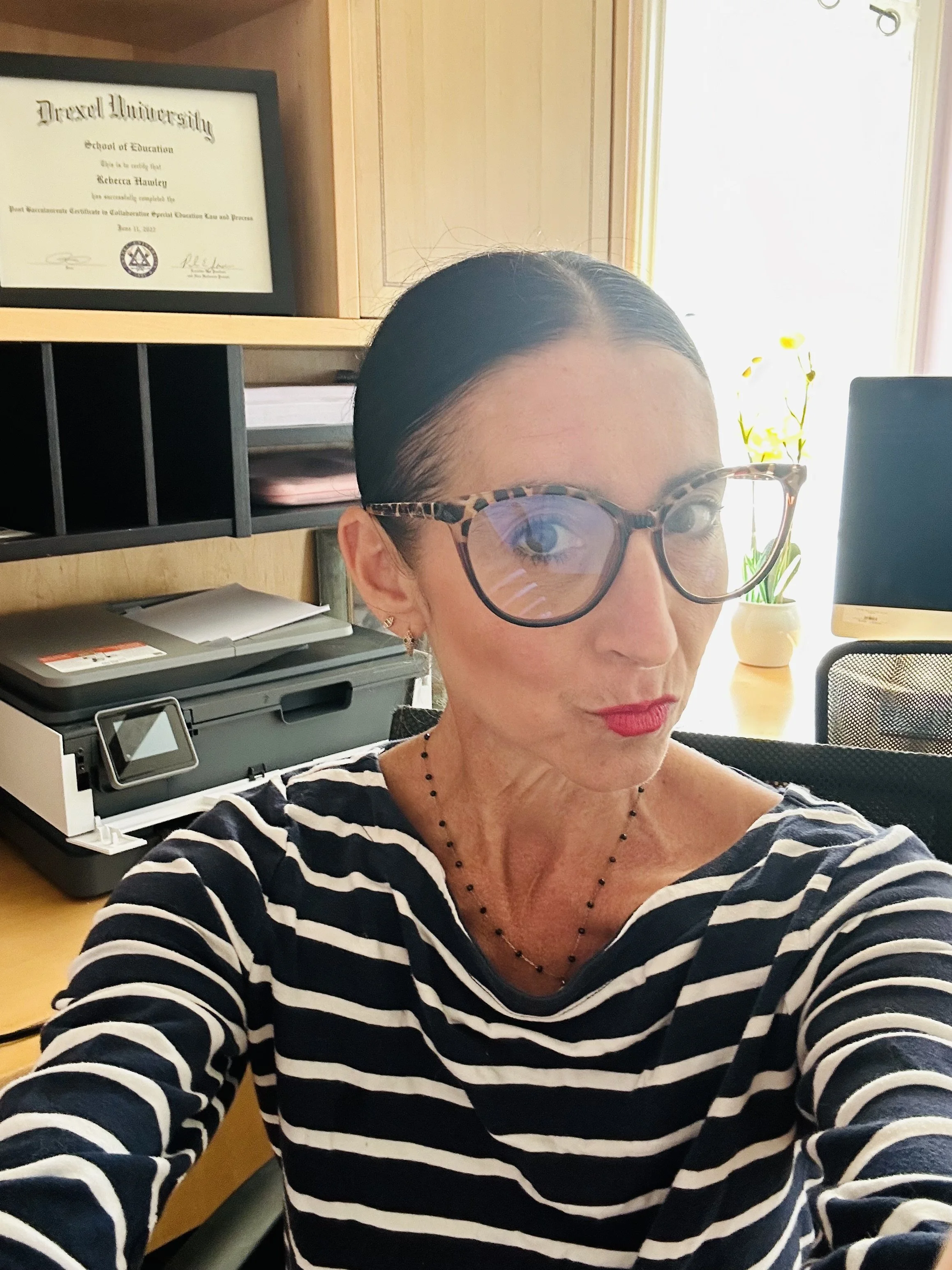
Dr. Rebecca Hawley is a special education advocate, educator, and developmental specialist who is passionate about helping families navigate the often complex world of educational support. Drawing on her expertise in child development, educational leadership, and her personal experience as the parent of a child with dyslexia, she helps families better understand their children's unique strengths and needs while building productive partnerships with schools. Her approach combines a deep knowledge of special education law and policy with a commitment to collaboration, ensuring that advocacy remains focused on what matters most: the child. Whether she is helping a family prepare for an IEP meeting, interpret evaluation results, or secure appropriate services, Dr. Hawley's work is grounded in empathy, clarity, and the belief that every student deserves to be seen, understood, and given the opportunity to thrive.
Tell us a bit about your journey into special education advocacy.
My path into special education advocacy has always been grounded in my work as a child and adolescent developmental specialist and educator, and as a parent of a now 25-year-old with dyslexia. As a professor and school leader, I spent years studying how children learn, develop, and respond to their environments. What I saw repeatedly was a disconnect between what we know about child development and how systems sometimes respond to students with diverse needs. Families often felt overwhelmed, unheard, or unsure of their rights. I was drawn to this work because I knew I could bridge that gap—bringing together developmental science, educational practice, and legal protections to support children! What continues to motivate me is simple: when systems work, children thrive. When they don’t, advocacy makes a difference. I imagine what I needed when I was a young child, struggling with a learning difference, dyslexia, this continues to drive my efforts. I always say “be what you needed when you were a kid!”
How would you describe your approach when advocating for families?
My approach is deeply relational and strategic. Special education advocacy is not just about knowing the law—it’s about understanding people. I partner closely with families, helping them feel informed, confident, and empowered. At the same time, I work to build collaborative relationships with schools whenever possible. It is not a fight, the common denominator is about the child, not us! When legal guidance and relational dynamics feel at odds, I ground myself in the student’s needs. The law provides a framework, but relationships create movement. I aim to balance both—being firm and precise when necessary, while also creating space for productive dialogue. Advocacy should not feel adversarial by default; it should feel purposeful and student-centered.
What is one practical first step for families?
The most powerful first step is helping families truly understand their child—not just their diagnosis, but their learning profile, strengths, and needs. Start with the strengths! From there, I encourage families to organize documentation: evaluations, report cards, and communication with schools. Knowledge is power in these systems. When parents can clearly articulate their child’s needs and reference documentation, it shifts the entire conversation and builds confidence.
Can you share a moment that captures why this work matters to you?
There was a family I worked with whose child had been misunderstood for years—labeled as “behavioral” when, in reality, the child had significant unmet learning needs. Through careful review, observation, and advocacy, we were able to shift the narrative and secure appropriate supports. What stayed with me wasn’t just the services the child received—it was the moment the parent said, “I finally feel like someone sees my child.” Advocacy is not just about services; it’s about dignity, understanding, and opportunity.
What do you find yourself saying to families over and over again?
You are your child’s most important advocate—and you don’t have to do it alone. Many families feel intimidated by school systems, but they have more voice and influence than they realize. I also remind families that this is a marathon, not a sprint. Progress takes time, but clarity, persistence, and strong parent-school partnerships make a profound difference.
You can learn more about Rebecca and her work via her website: https://drhawleypractice.com/