
Interview with an Expert: Dr. Jonine Nazar-Biesman, Psy.D, ABPdN & Dr. Jayme Neiman-Kimel Ph.D., ABPdN
In this installment of Interview with an Expert, Brain Matters pediatric neuropsychologists Dr. Jonine Nazar-Biesman and Dr. Jayme Neiman-Kimel share how understanding a child’s unique “brain map” can unlock clearer paths for learning, support, and long-term growth. By combining decades of experience, deep curiosity about the brain, and a collaborative approach to assessment and intervention, they help families and educators turn insight into meaningful action so children and adolescents can truly thrive.
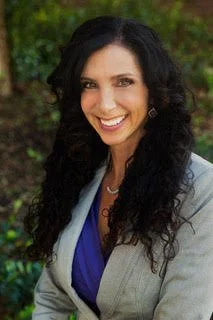
Briefly tell us your story. What led you to this work, and what has kept you in the field of pediatric neuropsychology?
Both of us have a nerdy passion for the brain, including brain development, neurodiversity, and brain health. Understanding the ways in which our human brains evolve and the vast complexities and beauties of this organ continue to fascinate us. Every day neuroscientists are uncovering the brain’s mysteries, wiring, and its brilliant interconnectivity. With regard to pediatric neuropsychology, we are presented with a wonderful opportunity and ability to gift parents with their child’s “brain map.” With intervention, the right experiences in the right doses, and strategic parenting; we can impact the brain’s development in adaptive ways. For children and families who are struggling, we are able to bring decades of expertise, precision, and confidence in helping children, adolescents, and young adults to thrive. When we can contribute in this way, we ourselves are fulfilled knowing that we have shaped young lives and have provided clarity to the drivers behind more challenging behaviors. After decades of this work, we have not grown tired of it in the least! We have instead remained immensely excited about the field and have invested much time in the training of emerging pediatric neuropsychologists.
What do you feel sets your approach or practice apart from others in the field, and what do you hope families experience when working with you?
First and foremost, the fact that we are parents ourselves makes our purviews especially more broad and authentic. While we know what the books say, the explanations, theories and philosophies provided, as well as the suggested self-help and parenting strategies; these guideposts do not always transfer into real life situations. In our practice, we are always focused on the whole child, the situation and experiences beyond test data, and functioning in the real world. Too many neuropsychological reports that we review focus on the “test data” without zooming out, going “off script”, testing limits, focusing on strengths, making meaningful connections with the child and family, and understanding all the moving parts and dynamics that bring children, adolescents, and young adults to our offices. We are also a lifespan practice, working with individuals across vast age ranges. Thus, we have a vantage point of knowing what to expect as the youth that we see launch into adulthood. We are certainly not a “one and done” practice. Once we complete a neuropsychological evaluation, we are part of a child’s team, and we follow and guide them through development. Most importantly, we are also therapists and seasoned practitioners ourselves. We do not merely sit in a testing bubble and deliver test results. We treat, we intervene, we work with family systems and the most complex cases, we provide daily therapy, and we go where the intervention is needed, including within homes and the community. In this way, we arrive to assessment with a very broad intervention lens and experience of not only identifying challenges, but treating them.

What does strong collaboration between families, schools, and clinicians look like to you?
We feel that collaboration should be quantifiable and measurable; meaning that if there is not noticeable and expected progress, then a shift in approach and communication is required. When professionals are working together toward a common goal, this meeting of the minds infuses the process with energy and a greater chance of success – which then translates into a positive sense of self for the student. What this looks like can be very different for each student/individual; this is why we are focused on a more tailored approach that takes into account what is important for each person who we guide through the therapeutic process. If there is not an intimate understanding of individual differences and the specific individual, then we are not moving the ball down the field. Brains are not cookie cutter and formulaic and everyone deserves to be approached from the ground up with fresh eyes.
We are huge proponents of coordinating treatment team meetings to include parents, educators, and any outside practitioners (e.g., psychotherapists, speech pathologists, occupational therapists, educational therapists, psychiatrists, etc.). Too often the “supporting cast” is working in isolation and not communicating, which is simply poor practice and ill-advised. We are at the forefront of treatment coordination, often leading teams to brainstorm and to think creatively for each child at hand. Simply stated, what has worked for one child, may be completely contraindicated for another. In the same vein, what has worked for one child one week, may not the next. The need for constant evaluation, reinvention, and flexibility is most often necessary.
Because we often assess and treat complex cases, we can share a general example. We have worked with students who have genetic anomalies, coupled with neurodevelopmental conditions, and mental health needs. Formulaic, school district standards and expectations often simply do not apply. Some of these cases are unprecedented and thus need a brand new lens, new rules, and new thinking. So, we have to fight the good fight and work as advocates as well as neuropsychologists to inform the correct path, to highlight strengths, and to best support students.
What is one piece of advice you find yourself giving families over and over again? Something you wish more parents could hear earlier in the process.
That is a very good question. The most common wisdom we would say that we provide to parents is to move away from the behavior itself and to truly understand what is behind the difficult moments. We suggest breaking this down, so we can guide the best way to detour and re-route approaches that are not working. The best way we can say it is to recognize when the same strategies are simply not working and find another way. Take a step back, take care of yourselves as parents, offer both yourselves and your children grace, figure out what your childrens' bodies and brains need, don’t take difficult behavior personally, and remain calm, grounded, and an expert. When children know that their parents empathize, that they have their backs, and are confident in their parenting toolbox; tense environments can begin to alter, as the focus becomes on the relationship rather than on the problem itself.
Is there anything you feel is especially important for families to hear that we haven’t discussed yet?
Just a little bit more about our story… Brain Matters is the evolution of us… Jayme and Jonine… as long time trusted clinical partners, genuine friends, ongoing students of neuroscience, and leaders in the field of pediatric neuropsychology. While we have had our own assessment and therapy practices for decades, we felt it was time to merge under the umbrella of Brain Matters to combine our “brain power” and to expand our services. We have been especially focused on building our specialized therapy and intervention arm that is guided always by a “brain map” of the individual. We have always been in the thick of intervention and treatment and have partnered with exceptional practitioners who we oversee to guide personalized “brain plans.” We bring years of joint experience, confidence, expertise, accuracy, and a system of checks and balances with each other to create a formidable team for our clients. We hold the advantage of our shared knowledge base and resources, and we double and triple check findings and recommendations to ensure the utmost accuracy and care in our services!
You can learn more about the Brain Matters team at their website- https://abrainmatters.com/ or email info@abrainmatters.com